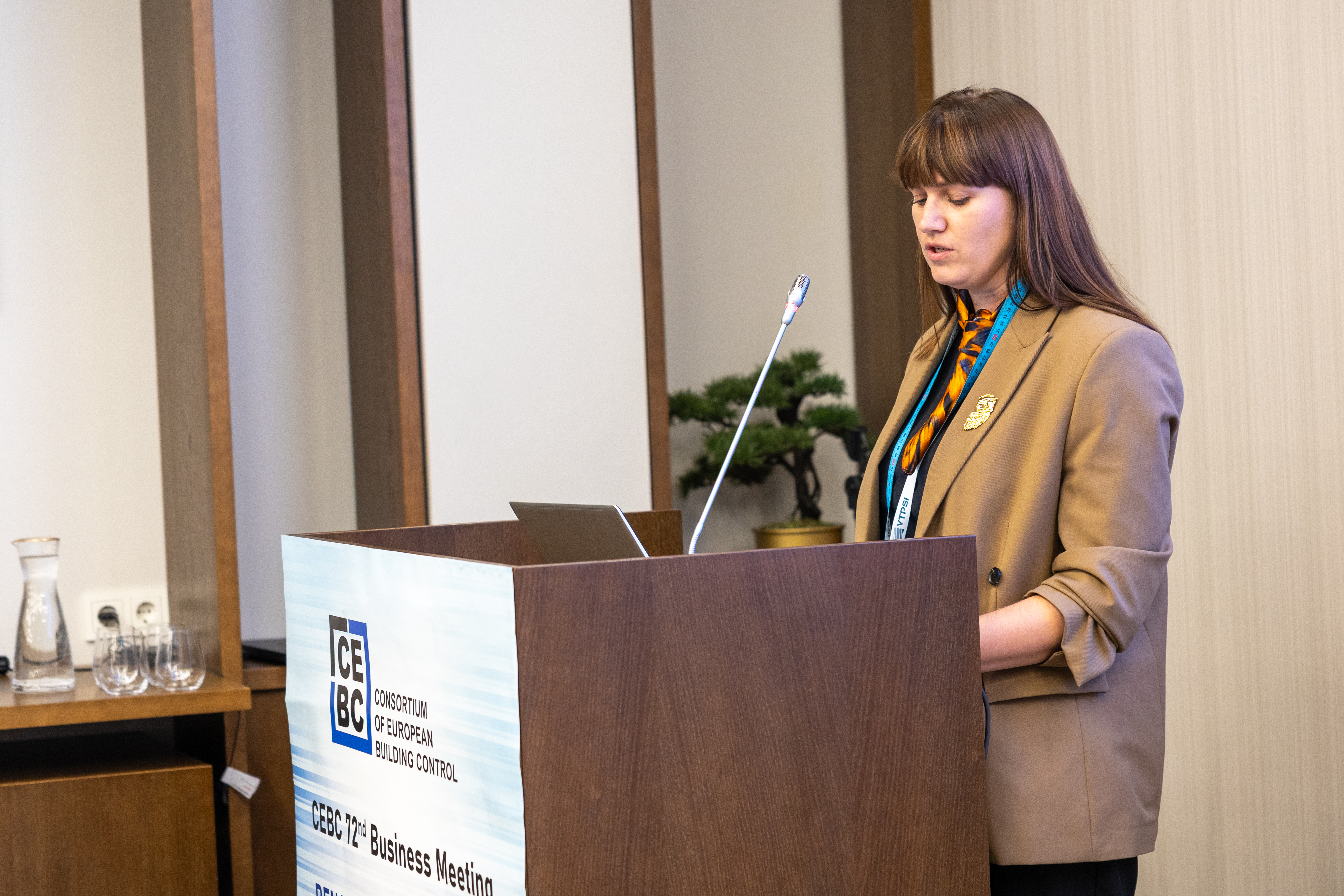
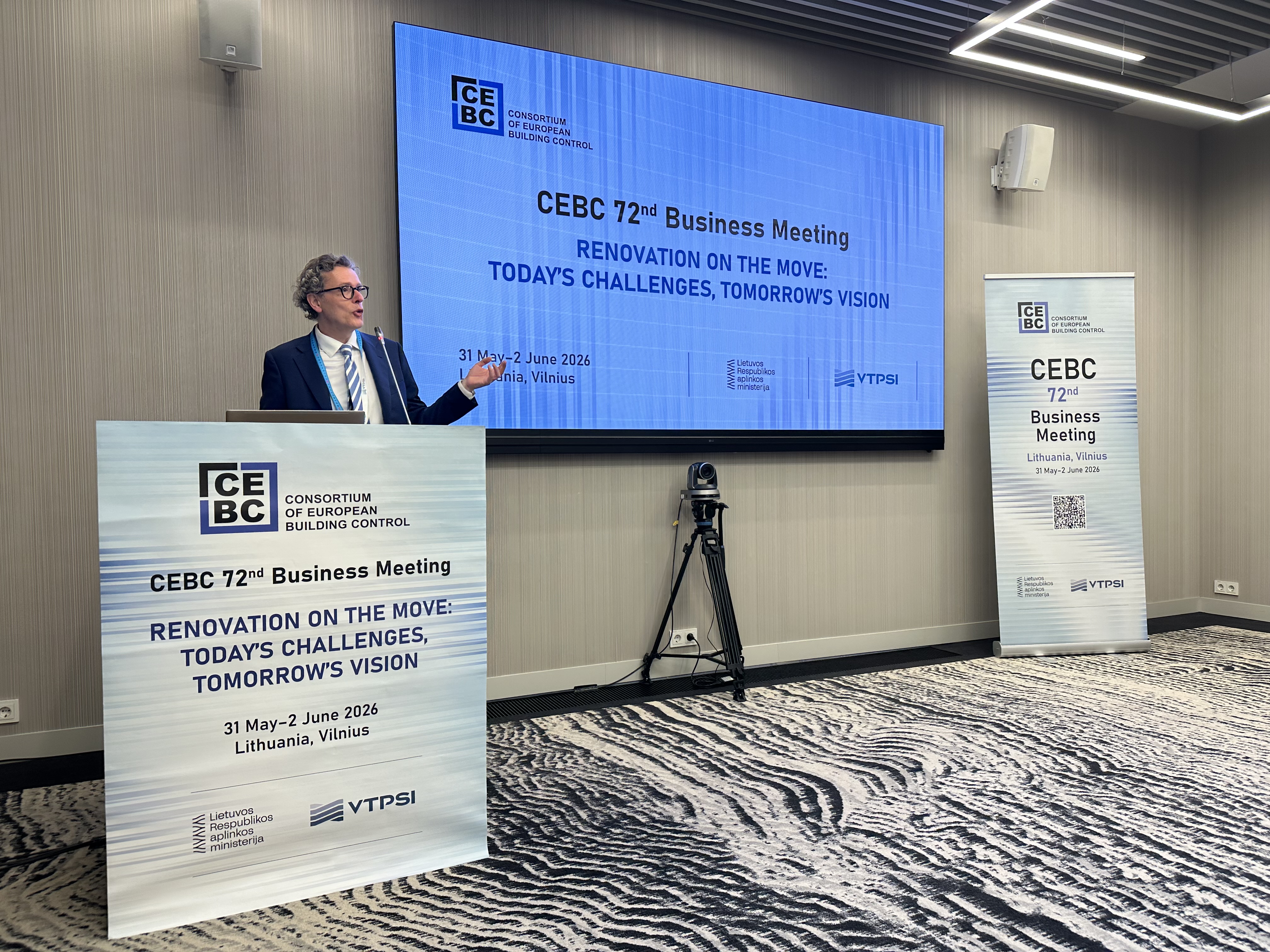
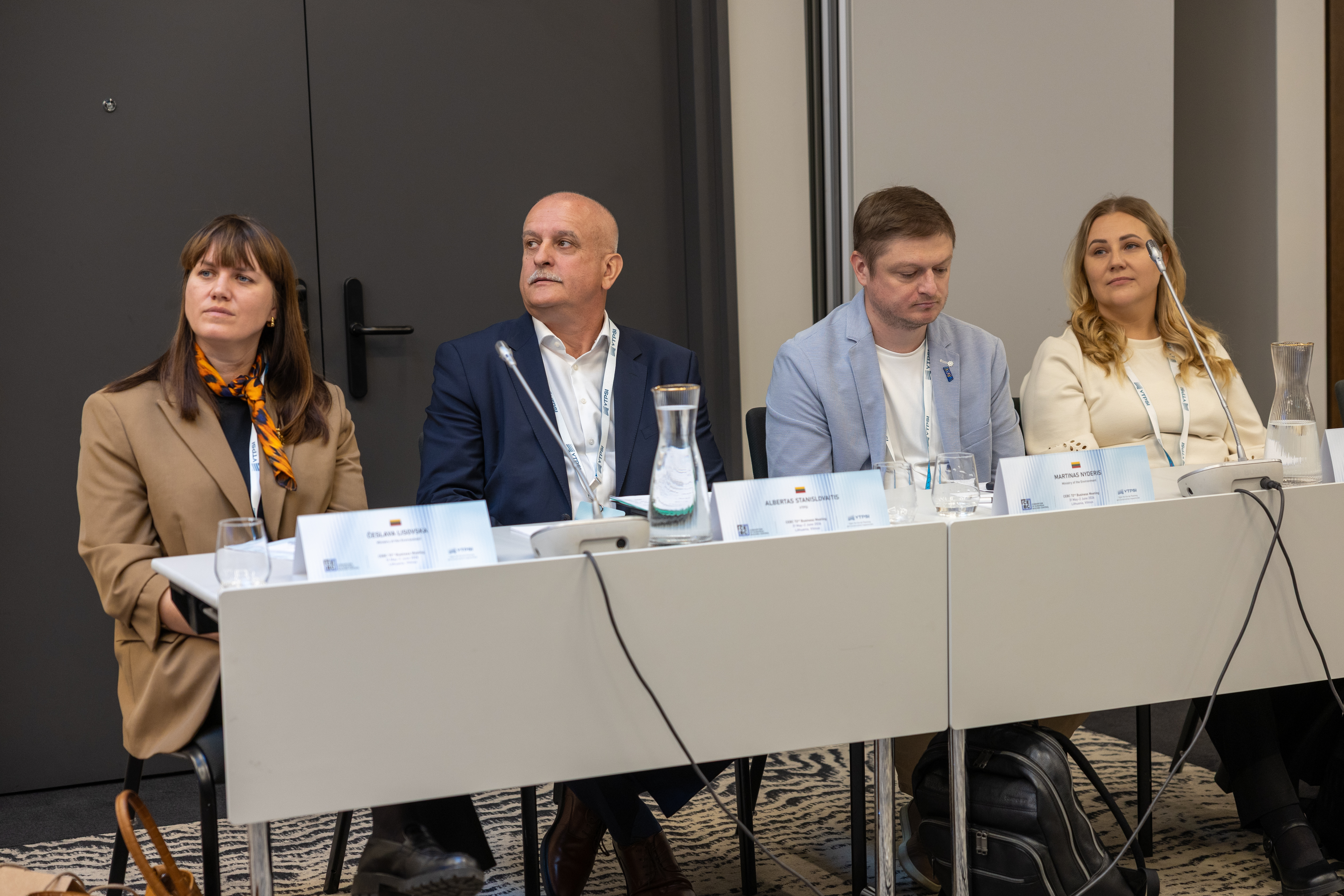
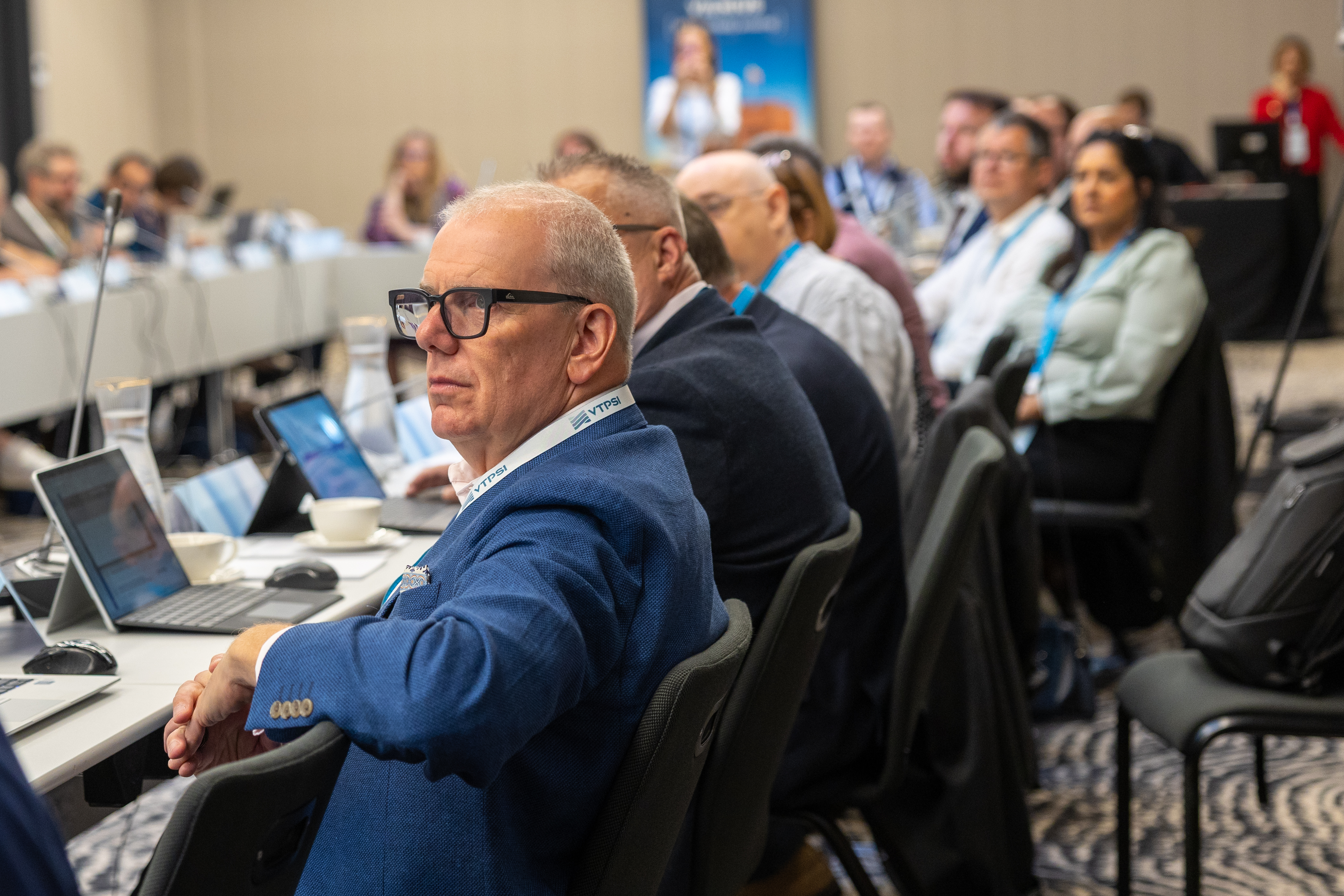
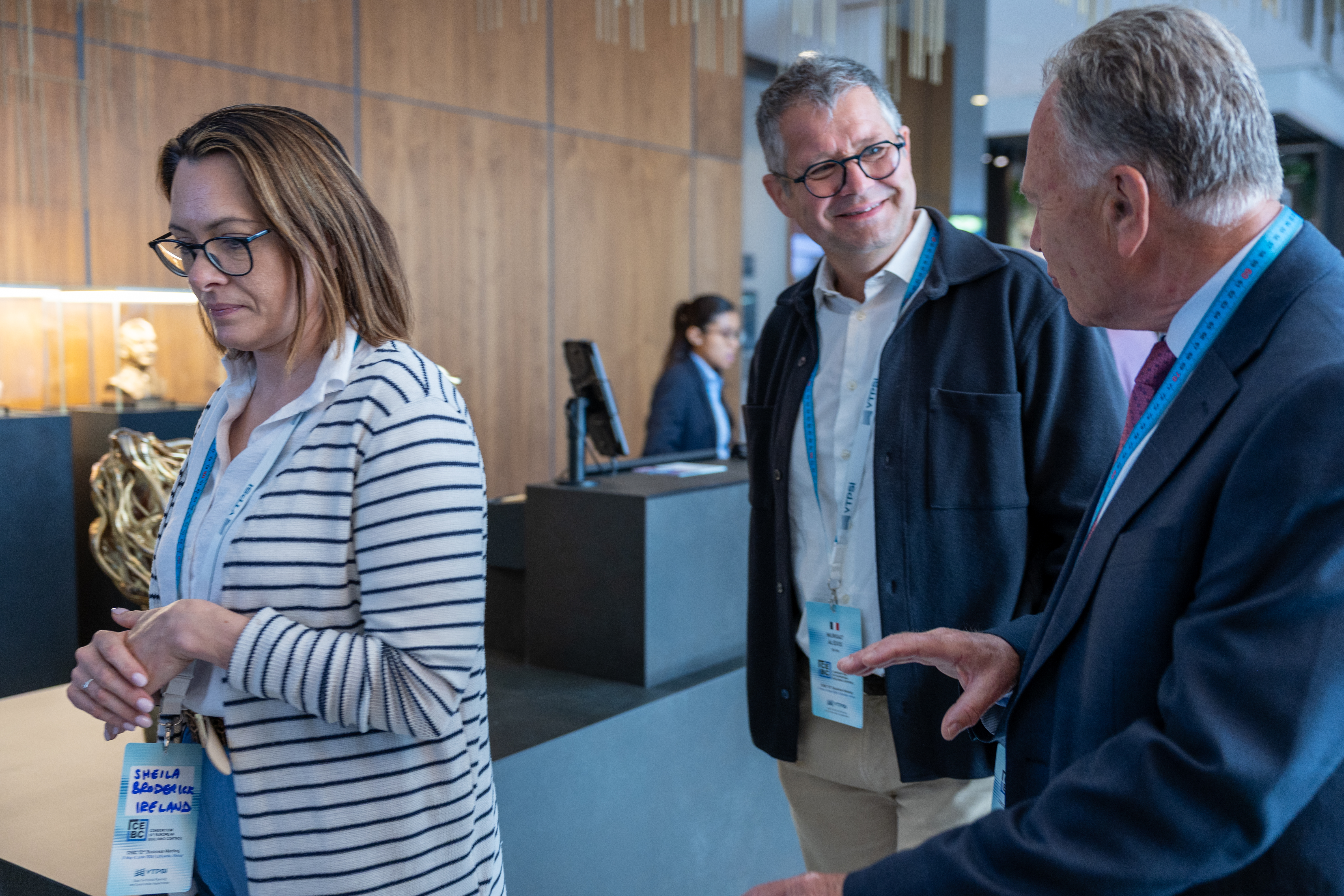
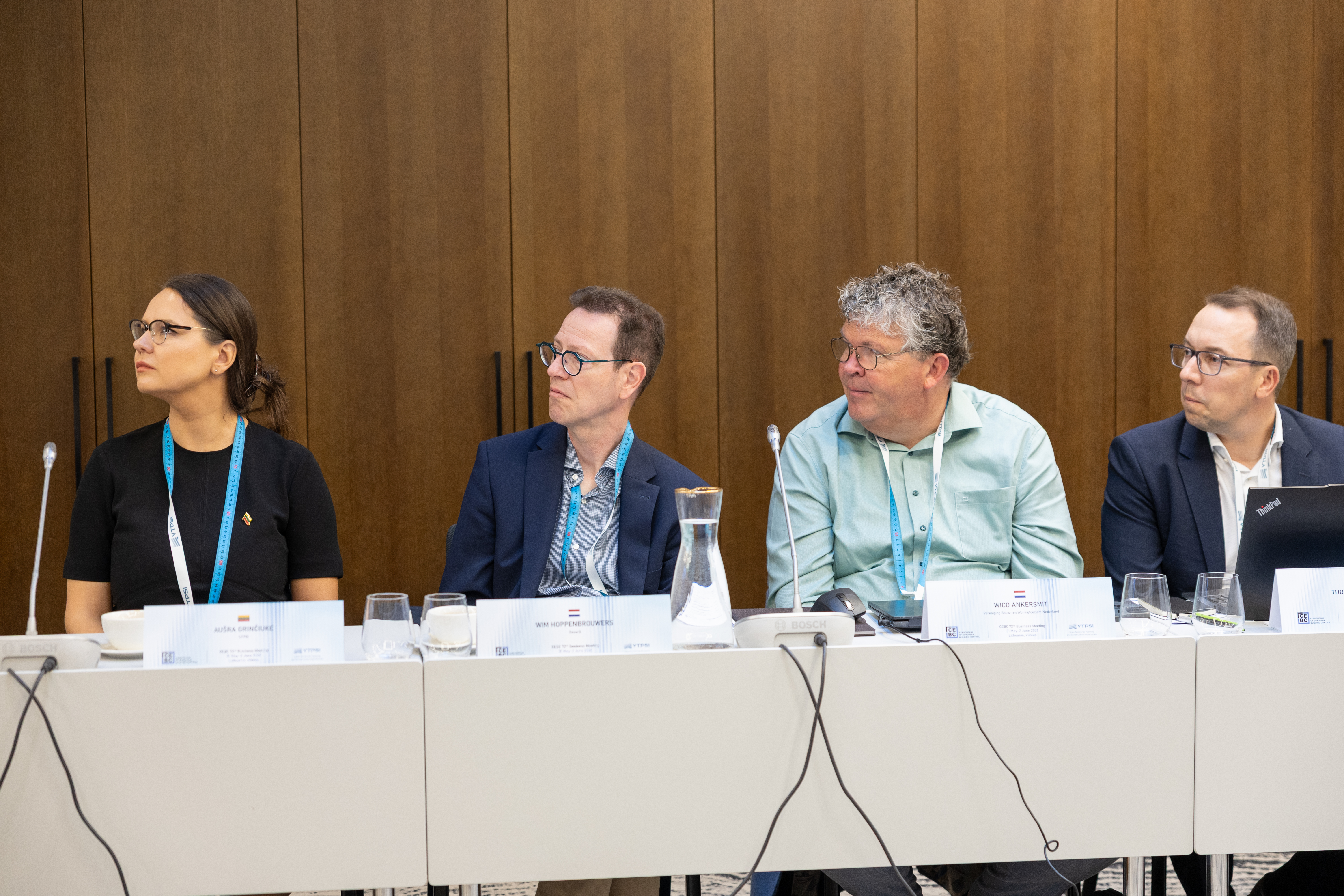
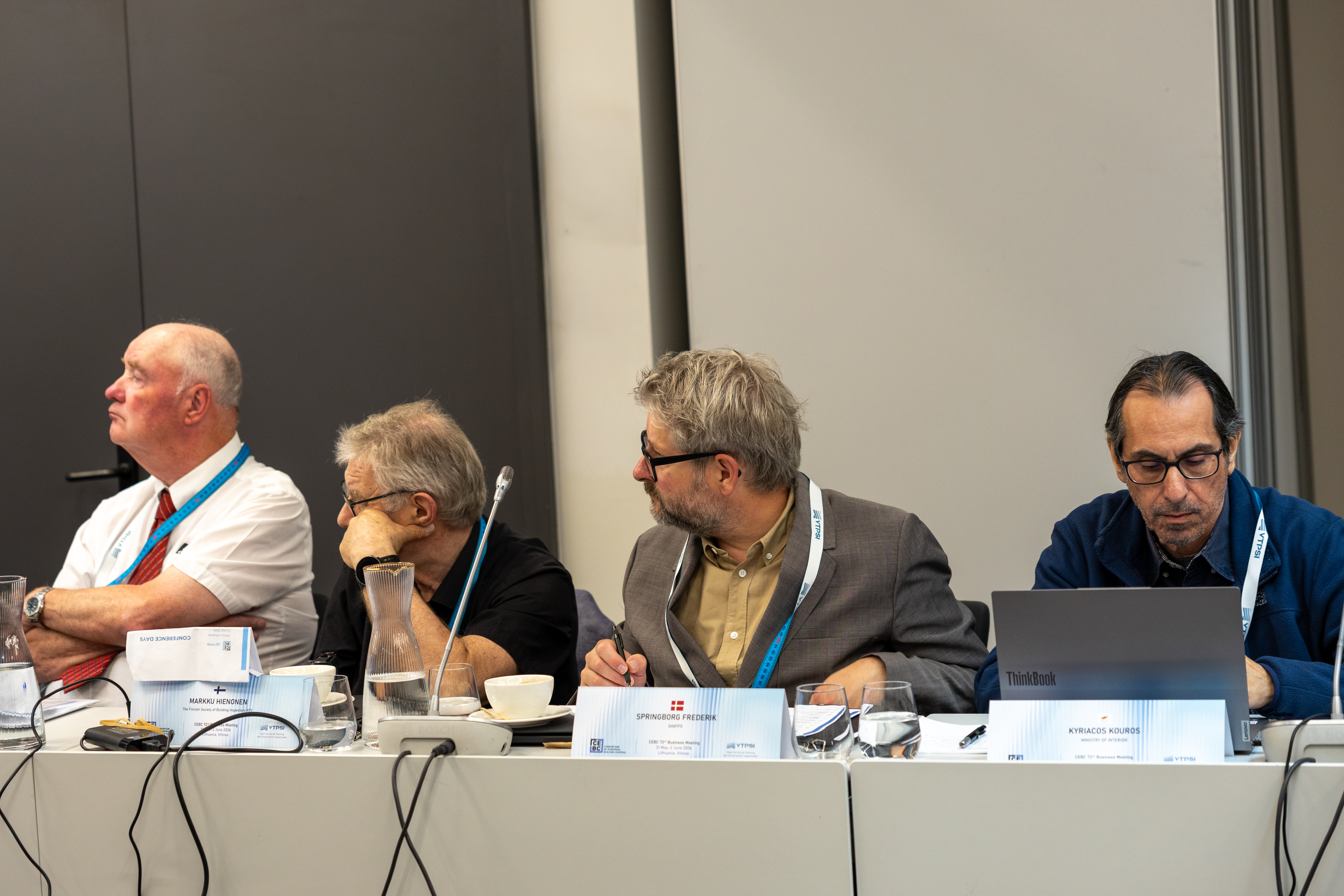
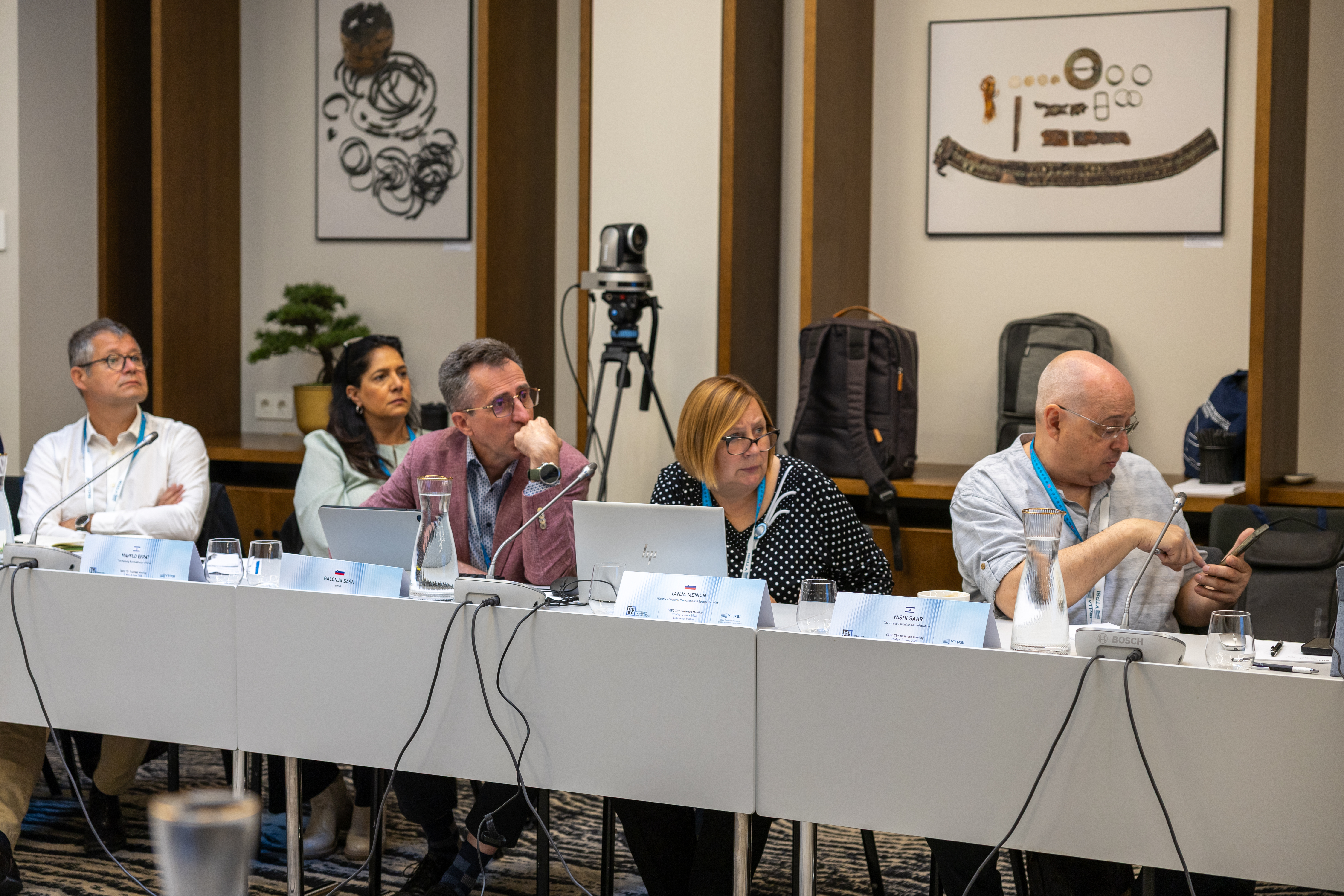
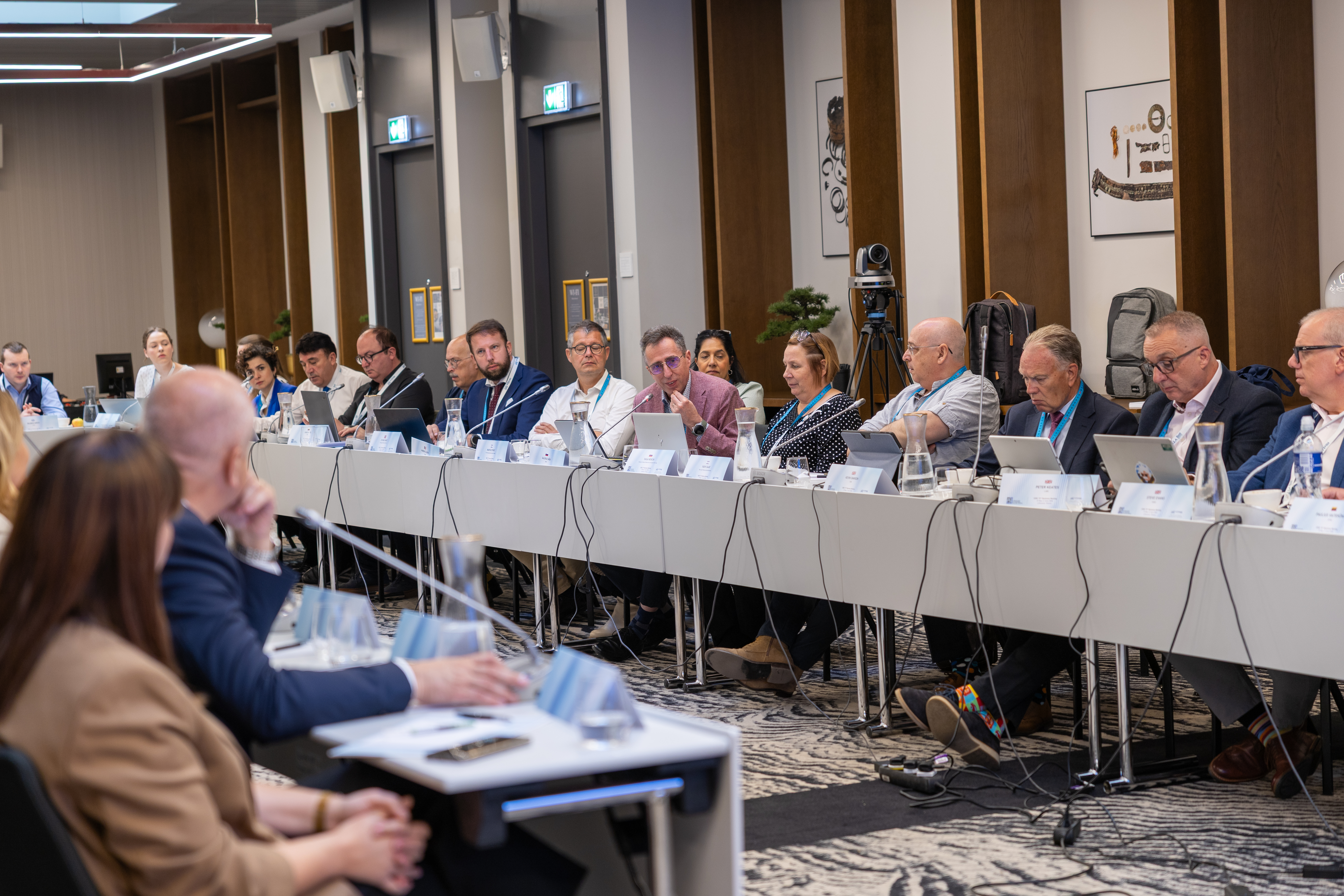
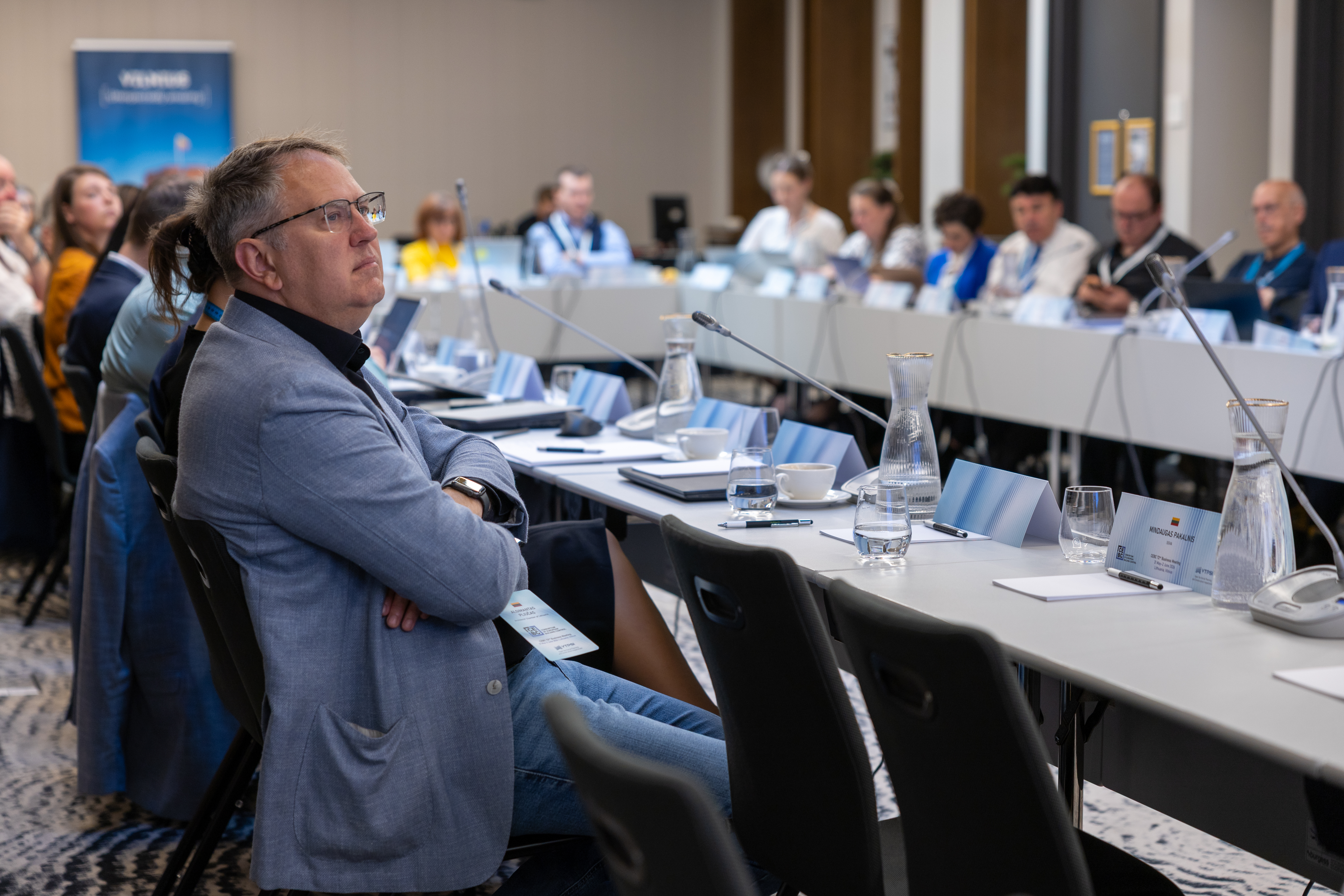
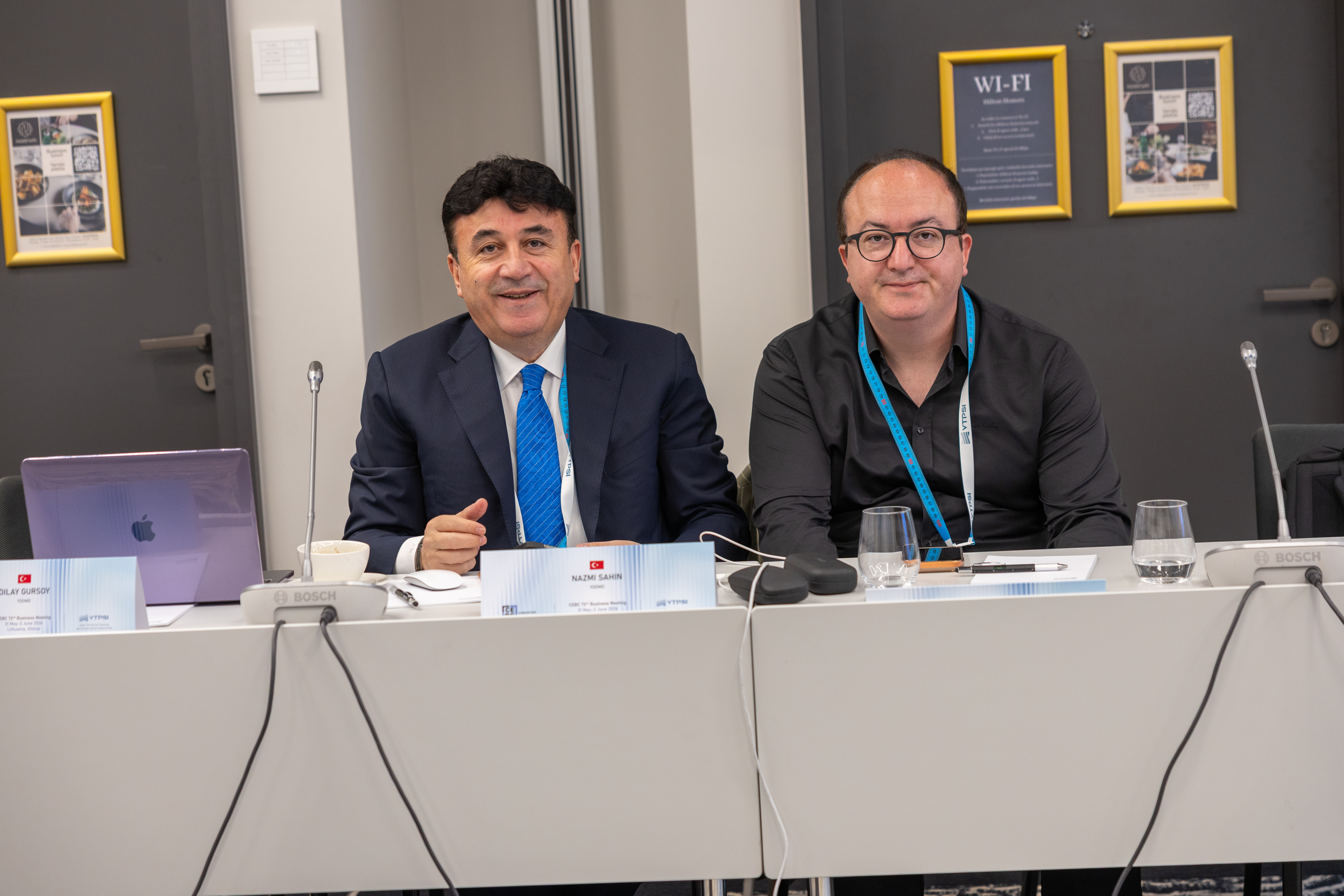
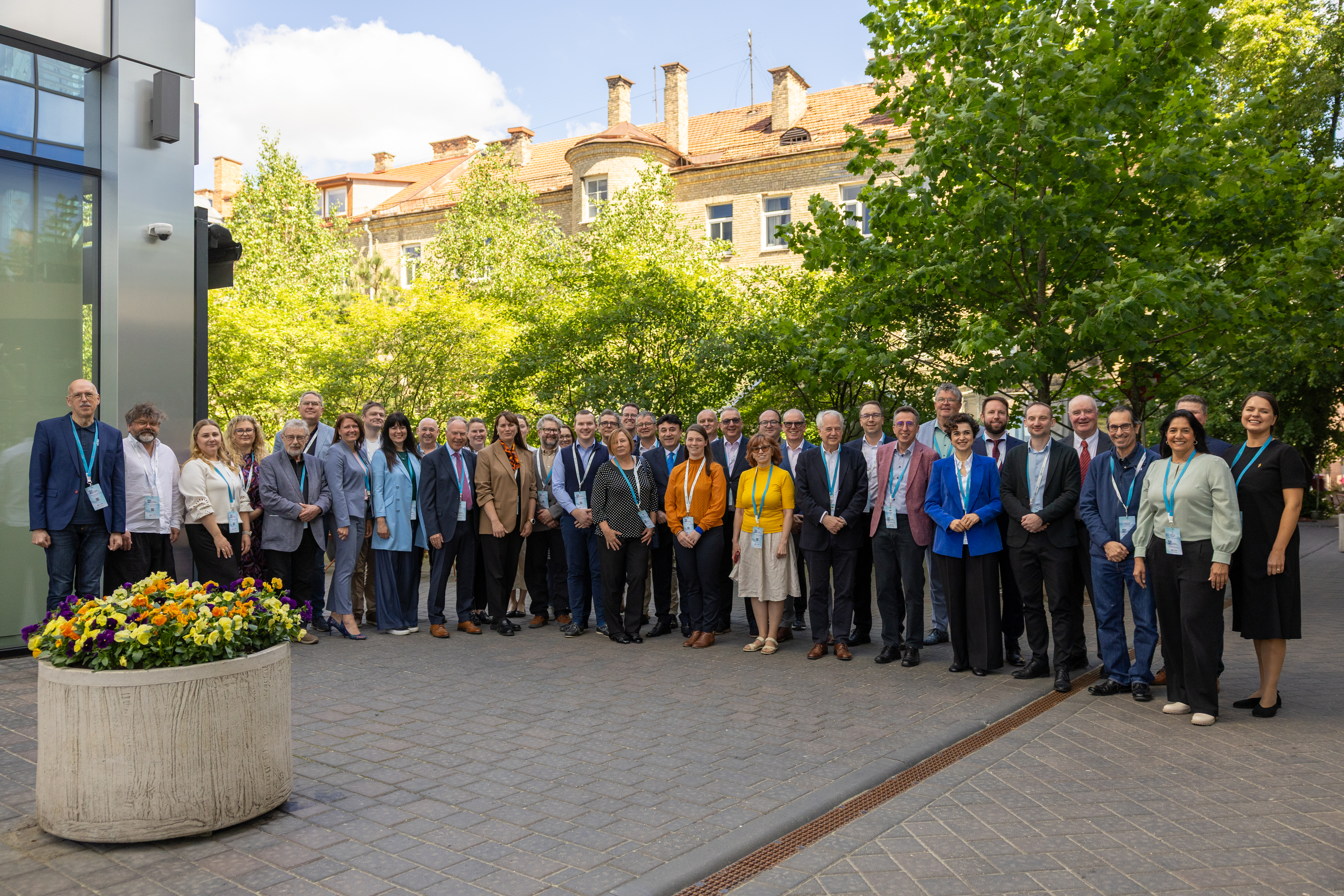
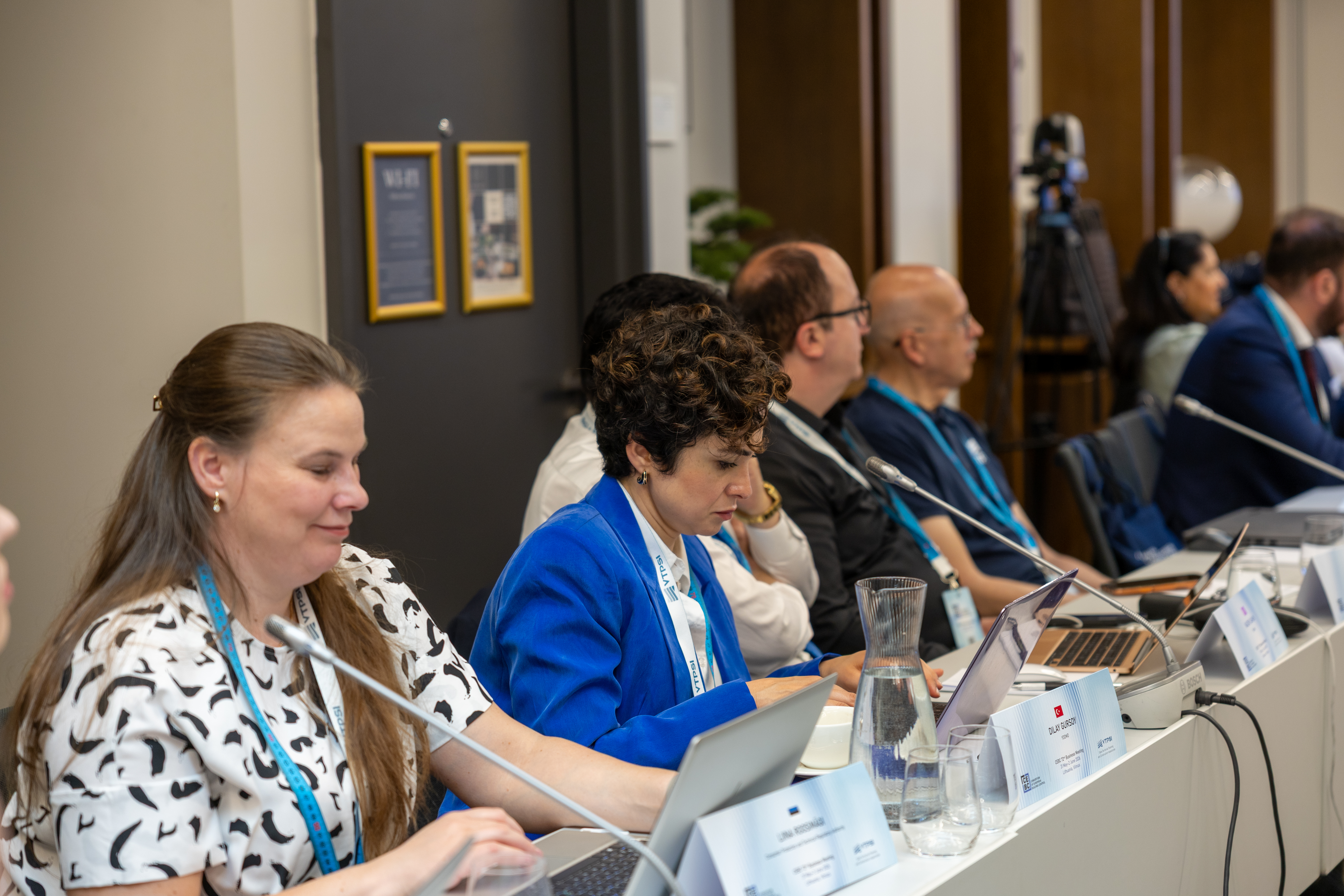
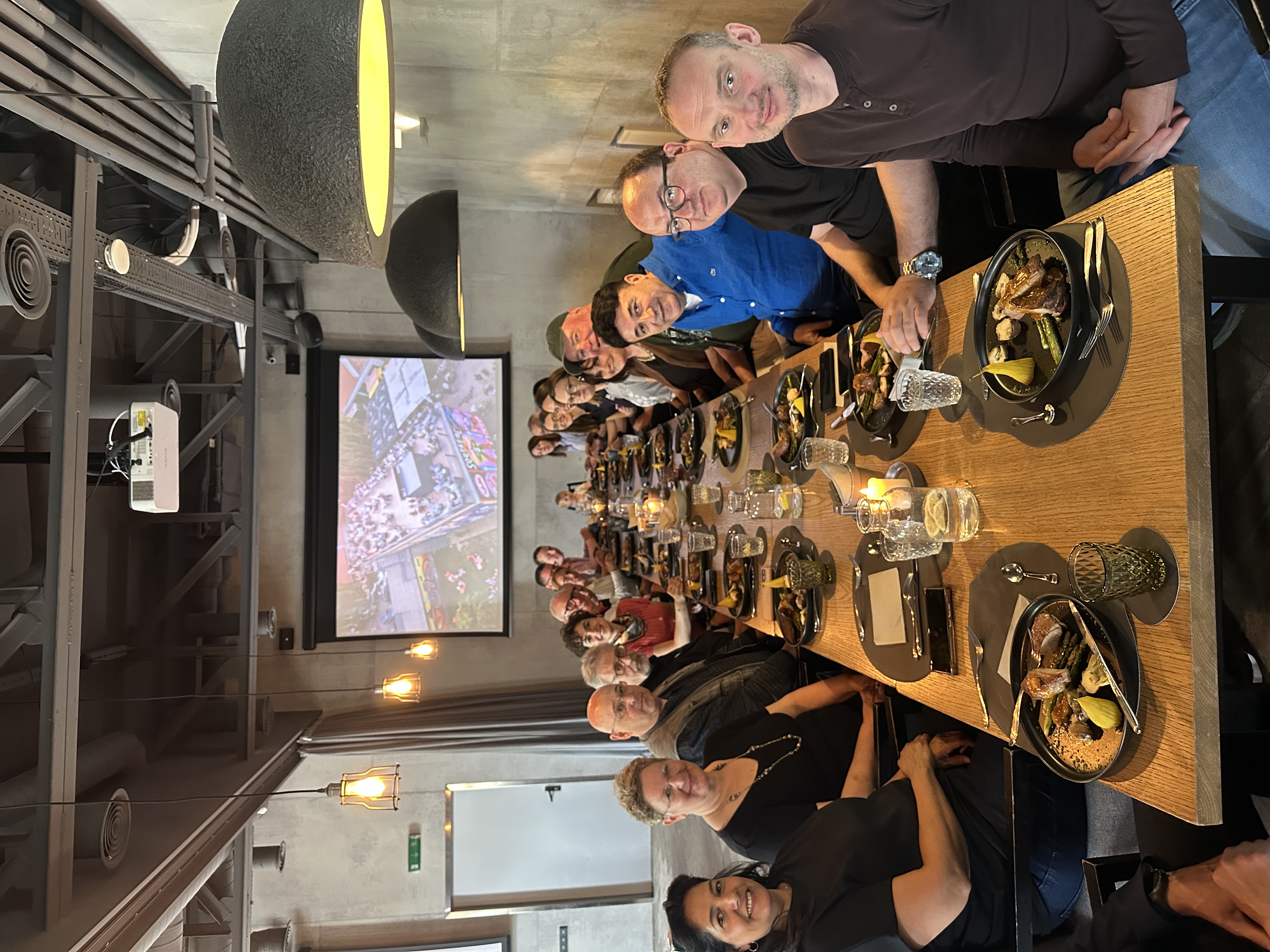
The 72nd CEBC Business Meeting took place in Vilnius, Lithuania, from 31 May to 2 June 2026, bringing together building control professionals, policymakers and industry experts from across Europe. Hosted by the State Territorial Planning and Construction Inspectorate (VTPSI), the event focused on the theme “Renovation on the Move: Today’s Challenges, Tomorrow’s Vision”, exploring how renovation policies, innovation and regulatory frameworks can contribute to a more sustainable built environment.
The conference officially opened on 1 June with welcoming remarks from Ms. Česlava Lisovska, Vice Minister of the Environment of Lithuania, and Mr. Sergio Vazquez, President of CEBC. Both speakers highlighted the growing importance of renovation in achieving Europe’s environmental and social objectives, while underlining the essential role of building control authorities in ensuring quality, safety and sustainability.
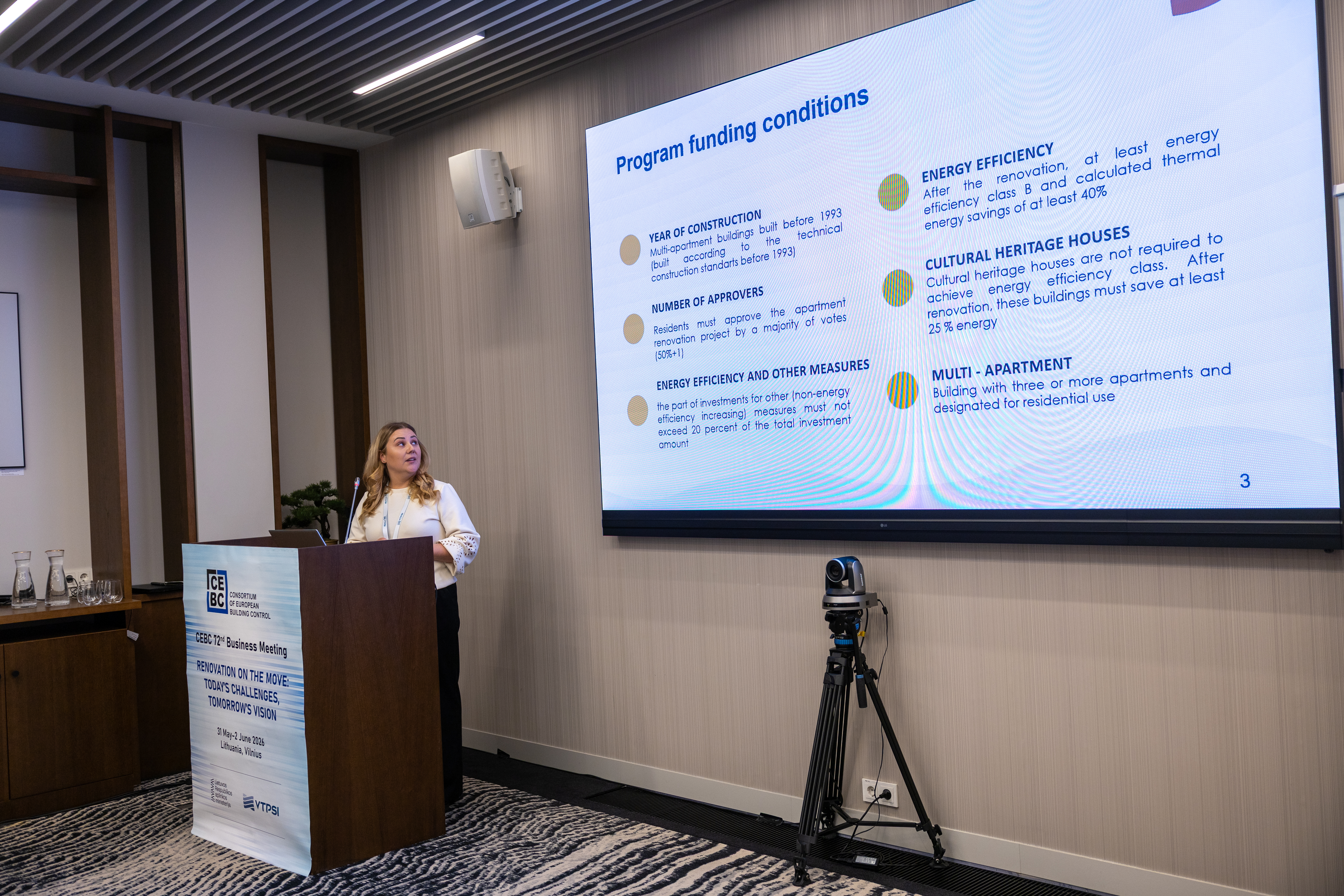
Throughout the day, delegates examined Lithuania’s ambitious approach to building renovation and energy modernisation. Presentations from representatives of the Ministry of Environment, the Environmental Project Management Agency, the Architects’ Chamber of Lithuania and VTPSI provided a detailed overview of national policies, funding mechanisms and practical implementation measures. Discussions covered the challenges of upgrading existing housing stock, the effectiveness of financial support schemes and the opportunities offered by innovative construction methods, including panel-based renovation solutions.
Attention then turned to exemplary renovation projects and future development strategies. Participants learned about the restoration of Bokšto Skveras, located within Vilnius’ UNESCO World Heritage Site, illustrating how heritage conservation can be successfully combined with modern urban needs. The programme also explored Lithuania’s long-term vision for the construction sector and the role that renovation will play in shaping more sustainable and resilient communities.
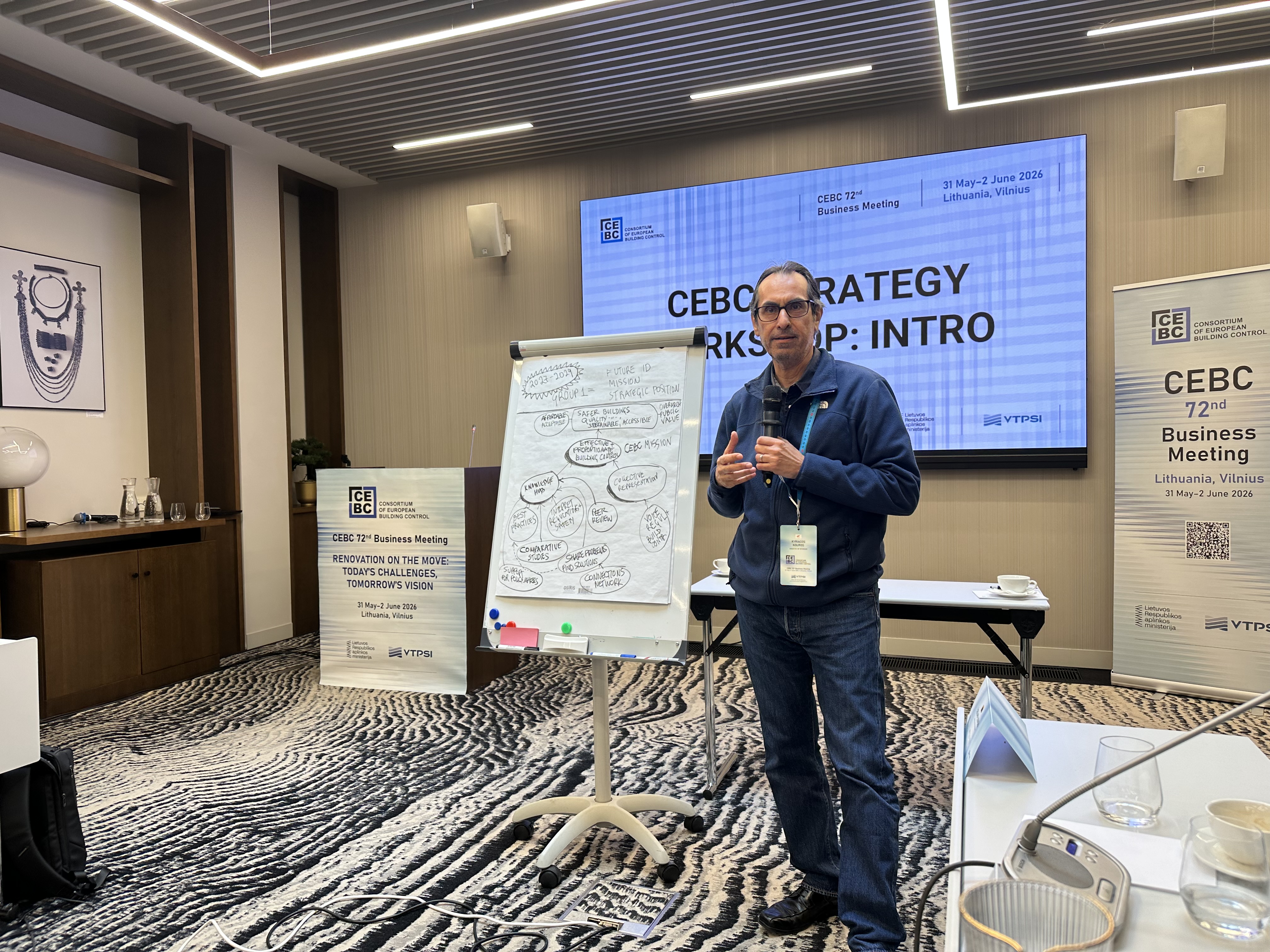
A key highlight of the meeting was the CEBC Strategy Workshop. Building on preparatory work carried out over recent months, members engaged in constructive discussions on the future direction of the organisation. The workshop provided an opportunity to reflect on CEBC’s priorities, strengthen its strategic objectives and identify new ways of delivering value to members and stakeholders across Europe.
The second conference day focused on knowledge sharing and organisational matters. A presentation on fostering a positive safety culture set the tone for the morning, followed by the Members’ Update Session, where delegates exchanged information on legislative developments, emerging challenges and good practices from their respective countries. These discussions once again demonstrated the strength of CEBC as a platform for international cooperation and professional exchange.
During the CEBC Business Session, members reviewed ongoing projects, considered financial matters and discussed preparations for future activities and meetings.
CEBC extends its sincere thanks to VTPSI for hosting the meeting and for the outstanding preparation of the event. Special appreciation is also due to all speakers, contributors and participants whose expertise, engagement and willingness to share experiences ensured productive discussions throughout the programme.
The Vilnius meeting demonstrated that effective renovation policies, strong regulatory systems and international collaboration remain essential ingredients in addressing the challenges facing Europe’s built environment.